
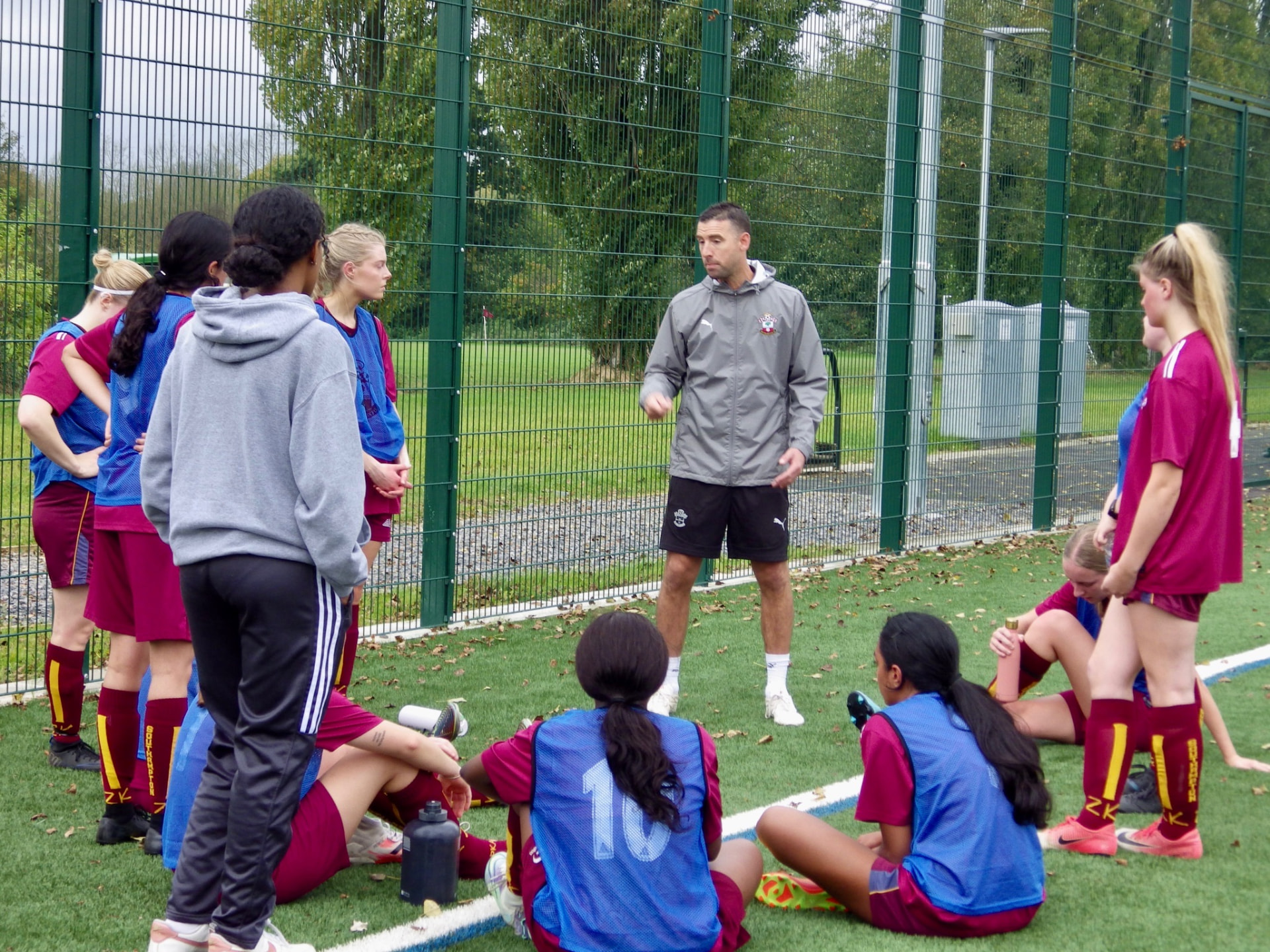
Most injuries in the women's game are not bad luck. A good warm up, regular strength work and smart training loads can prevent a large share of them.
The women's game has grown fast. More players, more matches and more intensity mean more injuries, and the injury that worries everyone most is the ACL.
The good news: the things that prevent injuries are simple, cheap and take 15 to 20 minutes a session. This guide covers what works, in plain English, for players, parents and coaches.
The ACL problem
Female footballers are around two to six times more likely to rupture their ACL than male players, depending on the study. The ACL is a ligament inside the knee that stops the shin bone sliding forward and twisting. A rupture usually means surgery and 9 to 12 months out.
- Body shape. A wider pelvis angles the thigh bone in towards the knee.
- Movement habits. Landing with straight legs, or letting the knees cave in, puts huge strain on the ligament.
- Strength balance. Many players rely on their quads more than their hamstrings and glutes, which protect the knee.
- Hormones. Changes across the menstrual cycle may affect ligament looseness, though the research is still mixed.
- Environment. Less access to strength coaching, poor fitting boots, packed fixture lists and pitches built for men's clubs.
You can't change your pelvis. But strength, movement and workload can all be trained, and that's where prevention works.
Warm up properly, every time
A structured warm up is the single easiest win.
- Get moving. Jogging with hip openers, side shuffles and short bursts.
- Strength and balance. Plank variations, single-leg balance, squats and Nordic hamstring curls.
- Speed and agility. Bounds, jumps with soft landings, and sharp changes of direction.
The trick is doing it every session, not just when the coach remembers. Make it the team's routine before every training and every match.
Get strong
Strong muscles act like armour for your joints. Two short strength sessions a week, on top of football, make a real difference. Focus on:
- Hamstrings. Nordic curls and Romanian deadlifts. Strong hamstrings protect the ACL and cut hamstring strains.
- Glutes and hips. Glute bridges, side-lying leg raises and banded crab walks. These stop the knee caving in.
- Single-leg strength. Split squats, step-ups and single-leg balance work. Football is played on one leg most of the time.
- Core. Planks and side planks to keep the body stable when landing and turning.
- Calves and ankles. Calf raises and hopping to protect against ankle sprains.
Girls can and should lift weights. Strength training does not make players bulky. Start with bodyweight, learn the technique, then add load gradually.
Learn to land and turn safely
How you move matters as much as how strong you are. Coaches should watch for these and correct them early:
- Land soft. Bend the knees and hips, land on the balls of the feet and "absorb" the landing quietly.
- Knees over toes. Knees should point the same way as the toes, never caving inwards.
- Turn in steps. Lower the body and take small steps into a turn, rather than planting one straight leg and twisting.
- Decelerate well. Practise stopping as much as sprinting. Many injuries happen while slowing down.
Manage load, rest and recovery
Injuries often follow a sudden jump in workload. Pre-season, a new team, or playing for University and club in the same week are classic danger points.
- Build up gradually. Avoid big spikes in training time or intensity from one week to the next.
- Sleep. Aim for 8 to 10 hours for teenagers and at least 7 to 9 for adults. Tired players move worse and get injured more.
- Rest days. At least one full day off football each week, and a proper break each year.
- Listen to niggles. A small pain that's ignored often becomes a big injury.
Fuel the body
Players who don't eat enough for the energy they burn are more likely to get injured, including stress fractures. This is called low energy availability, or RED-S. Warning signs include constant tiredness, frequent injuries and missed or irregular periods. Regular meals with enough carbohydrate, protein, calcium and vitamin D help. If you spot the signs, speak to a GP or sports medicine professional.
Periods, kit and boots
The menstrual cycle. Every player is different. Some feel no change; others notice fatigue, cramps or slower reactions at certain points. Tracking your cycle alongside how you feel in training helps you spot patterns. Coaches should create a space where players can talk about it without embarrassment.
Quick checklist
- Structured warm up before every session and match
- Two short strength sessions a week
- Landing and turning technique coached, not assumed
- No big jumps in training load
- Plenty of sleep and at least one rest day a week
- Eating enough to fuel training
- Boots that fit, with studs matched to the surface
- Niggles reported early, not played through
Injury prevention isn't a one-off drill. It's a habit. Teams that build these basics into every week keep more players on the pitch, and players who stay fit get better.