
Coaches Hub
Put Down the Joystick: The Coach Who Talks Less
· @DaveRimmer
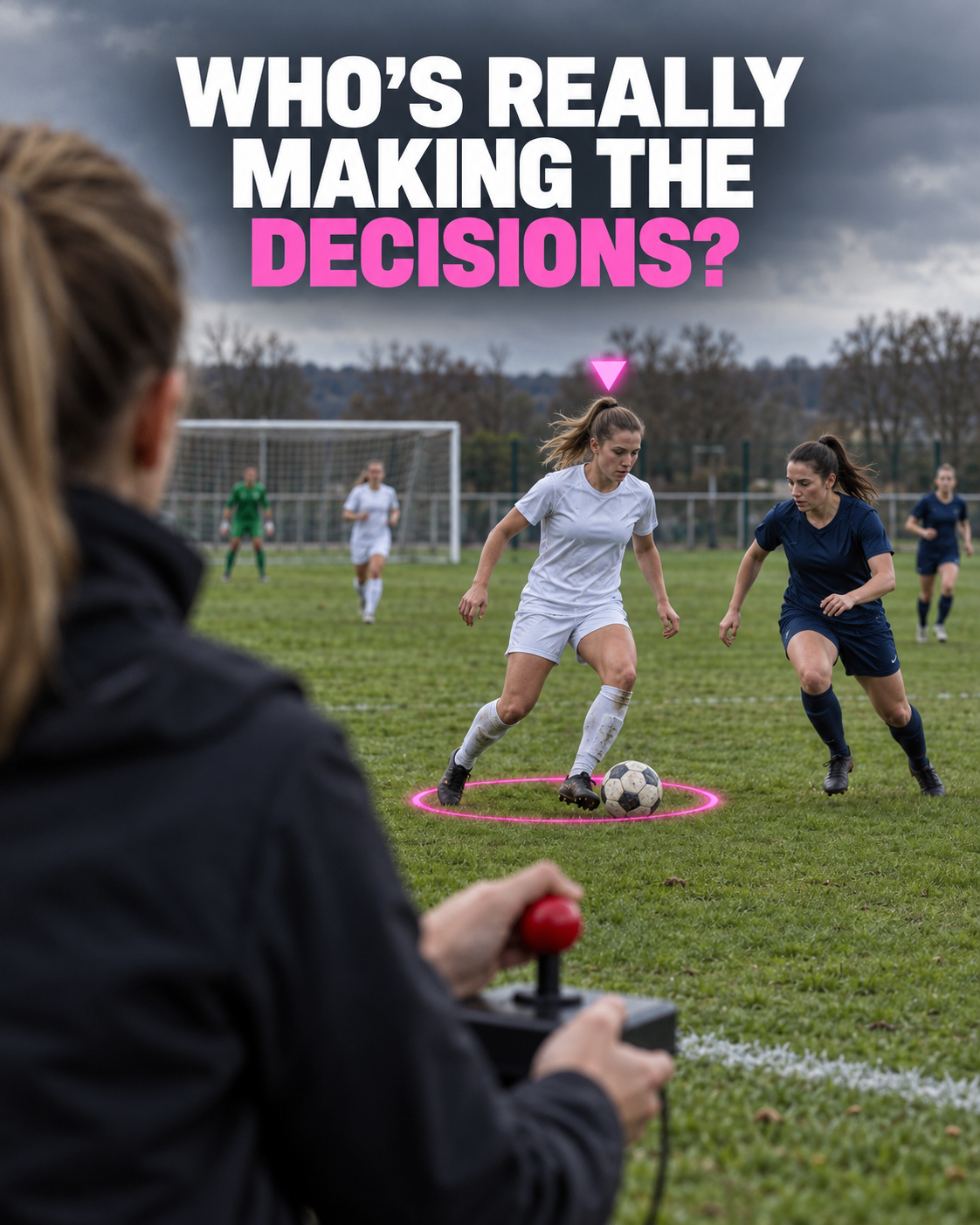
Every coach knows the feeling. The ball is at a player's feet, you can see the next move you want the player to make, and before you know it you've shouted "Switch it!" "Shoot!" “Go Home” “Play wide!”.
I call this joystick coaching. The coach is holding the controller and the players are the characters on the screen, moved left, right, forward and back by someone else's thumbs.
It comes from a good place. We care, and we want our players to do well. But a player who is always being steered never learns to steer themselves. If we want players who can think for themselves on match day, we have to put the joystick down.
Let them get it wrong
Players learn by making mistakes. A pass into a crowded area gets cut out. A dribble goes on one touch too long. A shot is taken from a tough angle when a teammate was free. Each of those moments teaches the player something no instruction ever could, because they felt the consequence themselves.
Over time, players build a toolbox. A disguised pass, a first touch away from pressure, a change of pace, a switch of play. But knowing the tools isn't enough. What develops a player is learning which tool fixes which problem, and recognising that problem in the moment.
That only happens if the player is the one choosing. If the coach shouts "switch it" every time the side gets crowded, the player learns to wait for the shout, not to recognise the crowded side. Take the mistake away and you take the learning away with it.
Two different pictures
The coach on the touchline and the player on the pitch are watching the same game, but they are not seeing the same picture.
From the side, the coach sees the whole pitch: the shape of both teams, the space on the far side, the run that's about to be made. The player sees something very different. They see what's in front of them, what they caught on their last scan, the defender closing them down, and the teammate who may or may not be looking for the ball. They also feel things the coach can't: the pressure, the tiredness.
Every decision a player makes is based on the information they've taken in from where they're standing. A pass that looks obvious from the touchline may not exist from the player's position. And sometimes the player has spotted something the coach hasn't.
When the shout and the picture don't match
This is where joystick coaching does the most damage.
Picture a player on the ball. Based on what they can see and feel, they've decided to play forward into a teammate's feet. Then the coach shouts "Switch it!"
Now the player has conflicting information. What they see is telling them one thing. The voice of the person who picks the team is telling them another. Many players will feel they have to follow the instruction, because it came from the coach.
That moment of hesitation costs time. By the time the player has processed the shout, changed their mind and adjusted their body, the switch may no longer be on. The forward pass they first saw has gone too. The space has closed, the chance has disappeared, or an opponent has stepped in and won the ball back.
The player gets feels the blame for losing it. But the real cause was the delay that the instruction created.
Talk after, not during
Talking less doesn't mean coaching less. It means moving the coaching to a better moment.
Instead of steering players during the action, pick out key moments and talk them through afterwards, at a drinks break, at half time or after the session. Then, rather than telling the player what they should have done, ask questions to get a feel for what they were thinking:
- What could you see when the ball came to you?
- What were your options?
- What made you choose that one?
- What happened next?
- If the same thing happened again, would you do anything different?
Sometimes you'll find the player made a good decision based on what they could see, and you'll learn something about the game from their side. Sometimes they'll spot the better option themselves once they talk it through. Either way, the solution belongs to them, and that's the one they'll remember on match day.
Put down the joystick
On match day, you can't play the game for them. The players will have to read the picture, choose the tool and live with the outcome. The more they practise doing that without a voice in their ear, the better they'll get at it.
So next game, try an experiment. Pick one half where you only speak to encourage. Watch what your players see, note the moments that matter, and save your questions for later. It may feel uncomfortable at first. You might see more mistakes.
But you'll also see players starting to think for themselves. And that's the whole point of coaching.
5 views
Comments (0)
No comments yet.